Thursday, April 30, 2015
April X-tra Blog
Senior presentations are vastly approaching and if I didn't know much about psychology, I'd think I'm dying because these nerves are killing me. I just wanna graduate already, move to Antarctica, live with the penguins, and make a seal pup fur coat. Is that so much to ask?

Wednesday, April 29, 2015
Blog 21 - Exit Interview
Content:
(1) What is your essential question, and what are your answers? What is your best answer and why?
How might a clinical psychologist successfuly implement change into the life of a consumer suffering from a personality or developmental disorder?
- Group Therapy
- One-to-one Therapy
- Family Therapy
My best answer is one-to-one therapy because it is more intimate on an emotional level, and that gives the biggest window for change.
(2) What process did you take to arrive at this answer?
Thorough studies and research involving the Diagnostic and Statistical Manual on Mental Disorders and my mentor ship.
(3) What problems did you face? How did you resolve them?
I found that the bigest struggle for me was scribing down all the research I had found and read about. I overcame this by making it fun for myself and not doing it in an environment where I'm more likely to not do it at all.
(4) What are the two most significant sources you used to answer your essential question and why?
The DSM was essential due to it being the handbook for all known mental disorders and guide to all known information regarding them. My other biggest source was my mentorship at CAPC due to it giving me the time to hone everything I've learned about and adapt them into real situations.
Monday, April 27, 2015
Blog 19 - Independent Component 2
LITERAL
(a) : “I, Aaron Joseph Martinez, affirm that I completed my independent component which represents 52 hours and 30 minutes of work.”
(b) Cite your source regarding who or what article or book helped you complete the independent component.
(d) Explain what you completed.
I conducted a series of one-to-one therapy sessions with individuals who agreed to answer a few preliminary questions in order to gauge where the school, as a whole, ranges on a moral to emotional scale. In return, I guaranteed the utmost of privacy concerning their answers were given. A range of people with a varied ethnicity, gender, and age were asked the same questions, all in i-Poly students. I asked the questions in hopes of getting statistics on where the youth of i-Poly is headed and what they may be thinking.
INTERPRETIVE
The questions asked and statistics received are as follows:
1. You're in a relationship and you've just discovered your partner or significant other has been cheating on you with someone who is the same sex as them, are you lenient at all towards them?
- Senior grade women were drastically less lenient. Senior grade men were more lenient. Female freshmen were hesitant on leniency. People in same sex relationships felt indifferent about the question, though would be hurt nonetheless.
2. If you had to choose between your mother and your father, who would you choose? (If not applicable, think metaphorical mother/father. ex) figurehead)
- Split evenly between men and women of all ages. No direct correlation between sexes and ages. All people preferred one over the other and nothing of note trended in between the sessions.
3. If you had to choose between your brother or your sister, who would you choose? (If not are applicable, think metaphorical brother/sister. ex) good friend)
- Split evenly between men and women of all ages. No direct correlation between sexes and ages. All people preferred one over the other and nothing of note trended in between the sessions.
4. Knowing yourself, are you more likely to become addicted to drugs, or alcohol?
- Majority of women said drugs. Majority of men said alcohol.
5. Would you cheat in a relationship?
- A majority of freshmen females said yes. Less upperclassmen girls said yes. A vast number of upperclassmen guys said no.
6. Would you flirt while in a relationship?
- A majority of freshmen females said no. A majority of upperclassmen girls said yes. A majority of upperclassmen guys said yes. The people who gave thought and hesitated when answering all said something along the lines of "not intentionally."
7. Would you find others attracted while in a relationship?
- Freshmen girls gave a resounding no. Upperclassmen women and guys both gave a yes, as a whole.
8. Flings and one night stands, would you do them?
- Freshmen gave an ew and never. As the age gap progresses, girls and guys were even with their answers, which was a yes. No was in the minority for this question.
9. Are you more introverted or extroverted?
- Split across sexes and ages. After evaluating the data, introverts were more likely to have one night stands and cheat rather than extroverts.
10. What is something you fear?
- (subjective answers) ex: clown, heights, emotional abandonment, butterflies, costumes etc.
11. What is something that makes you happy?
- (subjective answers) ex: music, youtube, movies, him, her, etc.
12. What is home to you?
- (subjective answers) ex: house, where the heart is, family, food, etc.
13. Do you like/hate/tolerate animals?
- Females greatly outnumbered guys in the "like" department concerning animals.
14. Do you hold grudges?
- Females greatly outnumbered guys when it come to holding grudges.
15. Would you take revenge?
- Guys greatly outnumbered girls when it came to acting out on one's emotions.
16. Are you forgiving?
- Hypocritical thought presented itself during this. A majority of guys and girls who said they were forgiving and would take revenge said that they, themselves, were forgiving individuals.
17. Would you say you're responsible?
- Freshmen were sided more to no. Upperclassmen greatly leaned towards yes.
18. Are you loyal?
- A majority of people who said they'd cheat also said they were loyal.
19. What is power to you?
- (subjective answers) ex: money, control over people, influence, respect, etc.
20. What is a flaw you see in yourself? Flaw is subjective, it's something you dislike and you wish you could change.
- (subjective answers) ex: skin, smile, personality, hair, voice, etc.
21. Are you self conscious?
- A majority of all people questioned said yes.
22. Do you tolerate things well?
- A majority of people who said zero leniency to cheating partner said they tolerate things well. Others that said yes to leniency, not so much.
23. Do you like/hate/tolerate kids?
- The number of women who liked animals differs greatly from the number of women who don't like kids. A majority of men tolerate/like kids.
24. What is family to you?
- (subjective answers) ex: home, where you're accepted, blood, etc.
25. When I say kill, what comes to mind?
- (subjective answers) ex: knife, if necessary, protect, bad, evil, hate, never, etc.
26. Are you more arrogant or confident?
- People who answered confident hesitated in answering. Arrogant people said they were arrogant affirmatively.
27. Are you honest?
- The individuals who said they'd cheat also said they were honest.
28. If you had to choose between friends and your family, who would you choose?
- Split results. No correlation between sexes and genders found.
29 Would do you think of betrayal?
- (subjective answers) ex: good, bad, worst, sucks, healthy, ok, etc.
30. In a rape scenario, would you rather be the victim, or the aggressor?
- Females barring a minuscule amount, said they'd rather be the victim. Men, barring a minuscule amount, said they'd rather be the aggressor.
APPLIED
How did the component help you answer your EQ? Please include specific examples to illustrate how it helped.
My additional hours helped me understand my topic much better because I was applying everything I had learned through textbooks such as the Diagnostic and Statistical Manuel of Mental Disorders and using the techniques mentioned in the middles of sessions. When dealing with certain people and the certain traits that make a consumer more prominent, I remembered the cautions stated in the DSM about trigger words or objects that may erupt responses, negative or positive, from consumers. I took these to my advantage during the one-to-one sessions and refrained from using authoritative words such as, should, now, and must when dealing with a consumer with possible emotional scars. I use all methods of one-to-one therapy, such as behavioral psychotherapy, cognitive psychotherapy, and others to get the information needed. It was through scenarios like this that I fully realized the importance of study, patience, and proper understanding when dealing with sensitive issues and topics concerning people of different ages, sexes, and backgrounds.
(a) : “I, Aaron Joseph Martinez, affirm that I completed my independent component which represents 52 hours and 30 minutes of work.”
(b) Cite your source regarding who or what article or book helped you complete the independent component.
First, Michael B., and Harold Alan Pincus. "Developmental Disorders." Developmental Disorders. Diagnostic and Statistical Manuel of Mental Disorders. 4th ed. Vol. 1. Washington, D.C.: American Psychiatric Association, 2000. 1-943. Print. DSM-IV-TR.
(d) Explain what you completed.
I conducted a series of one-to-one therapy sessions with individuals who agreed to answer a few preliminary questions in order to gauge where the school, as a whole, ranges on a moral to emotional scale. In return, I guaranteed the utmost of privacy concerning their answers were given. A range of people with a varied ethnicity, gender, and age were asked the same questions, all in i-Poly students. I asked the questions in hopes of getting statistics on where the youth of i-Poly is headed and what they may be thinking.
INTERPRETIVE
The questions asked and statistics received are as follows:
1. You're in a relationship and you've just discovered your partner or significant other has been cheating on you with someone who is the same sex as them, are you lenient at all towards them?
- Senior grade women were drastically less lenient. Senior grade men were more lenient. Female freshmen were hesitant on leniency. People in same sex relationships felt indifferent about the question, though would be hurt nonetheless.
2. If you had to choose between your mother and your father, who would you choose? (If not applicable, think metaphorical mother/father. ex) figurehead)
- Split evenly between men and women of all ages. No direct correlation between sexes and ages. All people preferred one over the other and nothing of note trended in between the sessions.
3. If you had to choose between your brother or your sister, who would you choose? (If not are applicable, think metaphorical brother/sister. ex) good friend)
- Split evenly between men and women of all ages. No direct correlation between sexes and ages. All people preferred one over the other and nothing of note trended in between the sessions.
4. Knowing yourself, are you more likely to become addicted to drugs, or alcohol?
- Majority of women said drugs. Majority of men said alcohol.
5. Would you cheat in a relationship?
- A majority of freshmen females said yes. Less upperclassmen girls said yes. A vast number of upperclassmen guys said no.
6. Would you flirt while in a relationship?
- A majority of freshmen females said no. A majority of upperclassmen girls said yes. A majority of upperclassmen guys said yes. The people who gave thought and hesitated when answering all said something along the lines of "not intentionally."
7. Would you find others attracted while in a relationship?
- Freshmen girls gave a resounding no. Upperclassmen women and guys both gave a yes, as a whole.
8. Flings and one night stands, would you do them?
- Freshmen gave an ew and never. As the age gap progresses, girls and guys were even with their answers, which was a yes. No was in the minority for this question.
9. Are you more introverted or extroverted?
- Split across sexes and ages. After evaluating the data, introverts were more likely to have one night stands and cheat rather than extroverts.
10. What is something you fear?
- (subjective answers) ex: clown, heights, emotional abandonment, butterflies, costumes etc.
11. What is something that makes you happy?
- (subjective answers) ex: music, youtube, movies, him, her, etc.
12. What is home to you?
- (subjective answers) ex: house, where the heart is, family, food, etc.
13. Do you like/hate/tolerate animals?
- Females greatly outnumbered guys in the "like" department concerning animals.
14. Do you hold grudges?
- Females greatly outnumbered guys when it come to holding grudges.
15. Would you take revenge?
- Guys greatly outnumbered girls when it came to acting out on one's emotions.
16. Are you forgiving?
- Hypocritical thought presented itself during this. A majority of guys and girls who said they were forgiving and would take revenge said that they, themselves, were forgiving individuals.
17. Would you say you're responsible?
- Freshmen were sided more to no. Upperclassmen greatly leaned towards yes.
18. Are you loyal?
- A majority of people who said they'd cheat also said they were loyal.
19. What is power to you?
- (subjective answers) ex: money, control over people, influence, respect, etc.
20. What is a flaw you see in yourself? Flaw is subjective, it's something you dislike and you wish you could change.
- (subjective answers) ex: skin, smile, personality, hair, voice, etc.
21. Are you self conscious?
- A majority of all people questioned said yes.
22. Do you tolerate things well?
- A majority of people who said zero leniency to cheating partner said they tolerate things well. Others that said yes to leniency, not so much.
23. Do you like/hate/tolerate kids?
- The number of women who liked animals differs greatly from the number of women who don't like kids. A majority of men tolerate/like kids.
24. What is family to you?
- (subjective answers) ex: home, where you're accepted, blood, etc.
25. When I say kill, what comes to mind?
- (subjective answers) ex: knife, if necessary, protect, bad, evil, hate, never, etc.
26. Are you more arrogant or confident?
- People who answered confident hesitated in answering. Arrogant people said they were arrogant affirmatively.
27. Are you honest?
- The individuals who said they'd cheat also said they were honest.
28. If you had to choose between friends and your family, who would you choose?
- Split results. No correlation between sexes and genders found.
29 Would do you think of betrayal?
- (subjective answers) ex: good, bad, worst, sucks, healthy, ok, etc.
30. In a rape scenario, would you rather be the victim, or the aggressor?
- Females barring a minuscule amount, said they'd rather be the victim. Men, barring a minuscule amount, said they'd rather be the aggressor.
APPLIED
How did the component help you answer your EQ? Please include specific examples to illustrate how it helped.
My additional hours helped me understand my topic much better because I was applying everything I had learned through textbooks such as the Diagnostic and Statistical Manuel of Mental Disorders and using the techniques mentioned in the middles of sessions. When dealing with certain people and the certain traits that make a consumer more prominent, I remembered the cautions stated in the DSM about trigger words or objects that may erupt responses, negative or positive, from consumers. I took these to my advantage during the one-to-one sessions and refrained from using authoritative words such as, should, now, and must when dealing with a consumer with possible emotional scars. I use all methods of one-to-one therapy, such as behavioral psychotherapy, cognitive psychotherapy, and others to get the information needed. It was through scenarios like this that I fully realized the importance of study, patience, and proper understanding when dealing with sensitive issues and topics concerning people of different ages, sexes, and backgrounds.
Tuesday, March 31, 2015
March Monthly Blogaru - Coulrophobia
Coulrophibia
is a phobia that I would have to admit to having while at a relatively young
age. I had loved horror movies as a child; often times watching those hours on
end while others would be watching cartoons. I had triumphed over the likes of
Jason Voorhees and Freddy Krueger, though nothing prepared me for the movie IT,
based on Stephen King’s book, which in my opinion, an escalated terror
in comparison to the movie. A young me laid perched on the floor, giddy with
anticipation, and the moments that followed would leave a mark on me that
wouldn't disappear for some time.

This defined act of terror caused serious distress to my once "horror addicted" self. The mere sight of the dreaded Pennywise would cause me to burst in tears and evacuate the premises. This often times led to ridicule from some family and friends, though all in good fun.

The new movie IT is coming out and I hope to see it! Why? My fear of clowns is now non-existent and I relish in the fact that I had triumphed over that fear. Though my symptoms of Coulrophia weren't all that serious, it's fun to think that I was actually terrified by them.
Shown below is a video of a serious case of Coulrophobia. I wish I were the clown.
Thursday, March 12, 2015
Blog 18 - Interview Prep
1. How might a personality disorder influence others around the consumer?
2. How might a developmental disorder influence others around the consumer?
3. How might a philia influence others around the consumer?
4. How might a fetish influence others around the consumer?
5. In a rape scenario, would you rather be a victim or aggressor in a rape scenario?
6. Would you rather be a tree or a statue? Why?
7. Would you feel more remorse for the death of a baby, or elderly person? Why?
8. How might an alcohol addiction affect others around the consumer?
9. How might a drug addiction affect others around the consumer?
10. How might a consumer whom is a child with a personality disorder affect their parents?
11. How might a consumer whom is a child with a developmental disorder affect their parent?
12. How might a consumer get a job if afflicted with a personality disorder?
13. How might a consumer get a job if afflicted with a developmental disorder?
14. How might a consume with a debilitating fetish get a job?
15. How might a consume with a debilitating philia get a job?
16. Would procrastination be considered an addiction?
17. Can addiction be considered a fetish?
18. Can a philia be considered an addiction?
19. How does the genre of music a person listens to affect a person's personality?
20. Does ethnicity have an affect in a person's personality?
Thursday, March 5, 2015
Answer #3
- EQ
How might a clinical psychologist successfully implement change for a consumer suffering from a personality or developmental disorder?
- Answer #3
I believe family therapy is key to successfully implementing change for a consumer suffering from a personality or developmental disorder.
- 3 details to support the answer
- family is your closest friends
-the relationship between family is more comfortable
-the consumer is more likely to be comfortable with people they trust
- The research source (s) to support your details and answer
DSM. The Diagnostic and Statistical Manuel on Mental Disorders.
- Concluding Sentence
Would you end poverty at the cost of your life, forever, or not and live. (No one will know you had to make the descision)
Saturday, February 28, 2015
February Blogaru
Hybristophilia : The attraction to one with an aura of violence and/or has committed crimes such as rape and murder.


This philia is an up and comer in today's society and many have unwillingly been seduced to the nature of this condition.
Rape and murder. What would certainly be a past no potential partner would agree with, the hybrisophiliac would say otherwise. These people revel in the acts of said beings and long to be in touch with them, literally.
Many psychologists are confused as to why this is becoming a thing, though they theorize that media has a strong relation to it's sudden growth. It has become a fad as of late to make out criminals and genocidal maniacs in movies to be, well quite frankly, attractive.
Another such reason why this may be catching on is due to our unconscious tendencies to find the alpha, the strongest of the group. The murderers display these traits vivaciously.

Charles Manson (Murderer/Rapist) has been recently married, even in prison and his old age.

Loki (Trickster God/Genocide Man) has thousands of fangirls screaming and even some who wish to be dominated sexually, non-consensual like, by him.
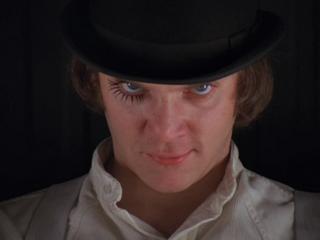
Alex DeLarge (famed fictional rapist and murderer) who has spawned many fan clubs hailing his actions in the book and movie,"A Clockwork Orange" as acts of what a true man should be.
Patrick Bateman (cannibal/murderer/rapist/Ted Bundy enthusiast) is the pinnacle of psychotic tendencies, though the basis of the real life crimes and motives don't shove off away from people's attraction to him.
Subscribe to:
Posts (Atom)